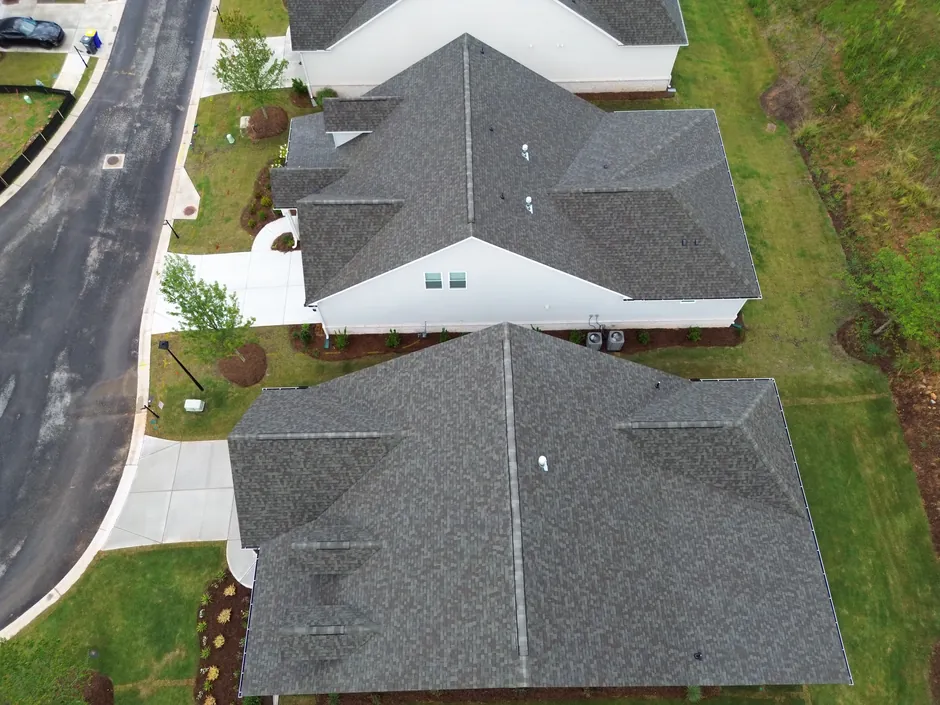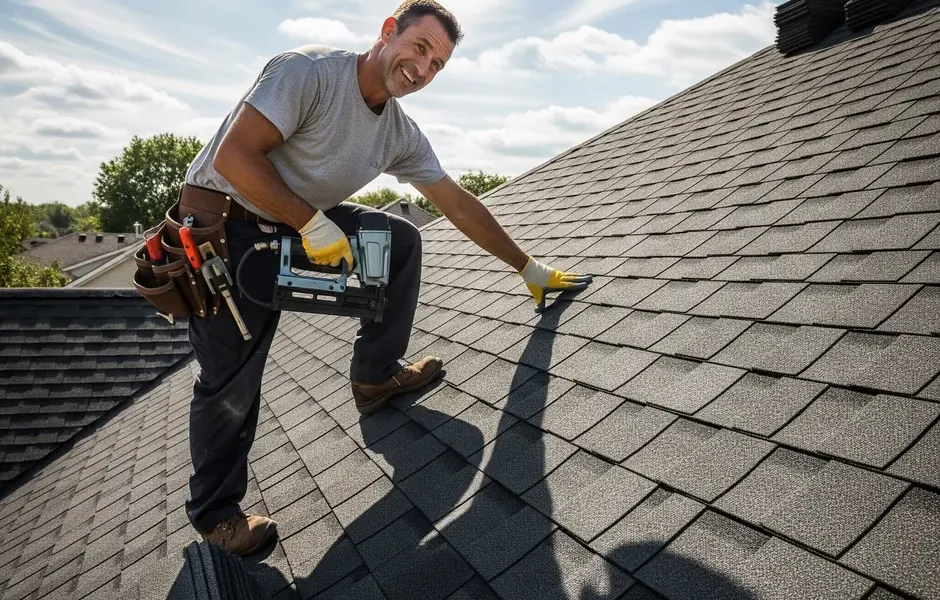
Choosing between asphalt shingles and a metal roof is the single biggest material decision most Alpharetta homeowners face during a roof replacement. The right answer depends on how long you plan to stay, what your HOA allows, how close you live to tree-lined lots, and how you feel about paying more up front for a roof that lasts twice as long. This guide walks through both options side by side so you can make the call with clear eyes.
At-a-glance comparison
| Factor | Asphalt shingles | Metal roofing |
|---|---|---|
| Installed cost (per sqft) | $4 to $7 | $4 to $17 (depends on profile) |
| Typical lifespan in GA | 20 to 25 years | 40 to 70 years |
| Curb appeal | Traditional, wide color range | Modern or classic, premium look |
| Noise in rain | Quiet (dampened by decking + attic) | Slightly louder; manageable with underlayment |
| Hail performance | Class 3 impact common on premium lines | Class 4 impact common on standing seam |
| HOA friendliness | Almost universally approved | Varies, check CC&Rs |
| Resale value impact | Standard expectation | Premium signal in the right neighborhood |
| Energy efficiency | Moderate (cool-roof shingles available) | High (reflective coatings, ventilated profiles) |
Pricing reflects 2024 to 2025 industry averages reported by Angi and HomeAdvisor. Labor rates and tear-off complexity in North Fulton tend to push installed prices to the middle or upper end of each range.
Cost comparison in Alpharetta
Asphalt is the budget benchmark for a reason. A standard architectural shingle replacement in Alpharetta runs $4 to $7 per square foot installed, all-in. On a 2,400 sqft roof that is roughly $9,600 to $16,800 before any upgrades for underlayment, ridge vent, or flashing repairs. Premium shingles, steeper pitches, and complex rooflines push the top of that range higher.
Metal roofing is a wider pricing category because the profile you pick matters more than the color:
- Standing seam metal, the clean vertical-panel look with hidden fasteners, typically runs $9 to $17 per square foot installed in the Atlanta metro. Expect the upper half of that range for 24-gauge steel with a Kynar 500 paint system.
- Stone-coated steel uses metal panels with granular stone chips that mimic shingle or tile, and it lands around $6 to $12 per square foot installed. It is popular on homes where the HOA wants a traditional texture without the shine of standing seam.
- Corrugated or exposed-fastener panels, the ribbed agricultural-style profile, is the budget metal option at roughly $4 to $8 per square foot installed. It is uncommon on Alpharetta primary residences but shows up on detached garages, pool houses, and barndominium-style builds.
That means a mid-range standing seam on the same 2,400 sqft home usually falls between $24,000 and $36,000. The up-front premium over asphalt is real, but the cost-per-year of ownership flips the math for homeowners who stay long enough. (See Angi’s metal roof cost guide for national comparison data.)
Lifespan and warranty reality
Warranty marketing is where most homeowners get misled. A “30-year” or “lifetime” asphalt shingle warranty describes the manufacturer’s coverage window, not how long the product actually performs in the Georgia sun.
Asphalt shingles in our climate realistically last 20 to 25 years. The National Roofing Contractors Association has long noted that UV exposure, thermal cycling, and humidity wear shingles faster than the warranty card suggests. Heat accelerates asphalt binder aging, and Alpharetta summers routinely push roof-deck temperatures well past 140°F. By year 20, expect granule loss, minor curling, and the beginning of sealing-strip failure on most standard-grade roofs.
Metal roofing lives in a different category. A properly installed standing seam roof with a Kynar 500 (PVDF) paint system will typically last 40 to 70 years, with the paint finish carrying its own 30-to-40 year film-integrity warranty. Stone-coated steel is generally rated for 40 to 50 years. The substrate rarely fails first. What ages is the paint and the fasteners.
Put simply: an asphalt roof is almost always the “sell it before it fails” option. A metal roof is the “one more roof in my lifetime” option.
Hail and storm performance
North Georgia gets its share of severe spring storms, and hail is the single most expensive claim trigger in the region. The Insurance Institute for Business & Home Safety (IBHS) rates roofing materials on impact resistance using the UL 2218 standard, which drops a steel ball from increasing heights onto the surface:
- Class 1: survives a 1.25” ball from 12’
- Class 2: survives a 1.5” ball from 15’
- Class 3: survives a 1.75” ball from 17’
- Class 4: survives a 2” ball from 20’
Class 4 is the top rating, and it is what you want in a hail-prone market. Most premium architectural shingles (GAF Timberline AS II, CertainTeed NorthGate ClimateFlex Duration StormGuard) reach Class 4. Standard architectural lines often stop at Class 3. Standing seam steel and stone-coated steel are nearly always Class 4 out of the box.
IBHS’s FORTIFIED Roof designation goes a step further, specifying sealed roof decks, enhanced attachment, and better flashing, and some Georgia insurers offer premium discounts for FORTIFIED certification. Ask any contractor bidding your job whether the system they are quoting can qualify.
Alpharetta HOA and community fit
This is the factor most homeowners underestimate until they submit their architectural review request. North Atlanta’s premium HOAs each have their own rules, and several expressly address roof material:
- Windward, one of the largest master-planned communities in Windward, Alpharetta, traditionally favored architectural asphalt in earth tones, though premium metal roofs have become more common in recent rebuilds as standards have modernized.
- Country Club of the South: tighter architectural review, where standing seam approvals usually require matte finishes and specific color palettes.
- Halcyon, Avalon-adjacent townhomes, and newer mixed-use communities tend to be more open to modern profiles because the base architecture already leans contemporary.
- Older Alpharetta neighborhoods off Main Street often have no HOA, but traditional aesthetics still make architectural asphalt the path of least resistance at resale.
Rule of thumb: submit the exact product spec sheet (manufacturer, profile, color, gloss level) to your ARB before you sign a contract. Approvals that look like formalities sometimes come back with modifications, and changing the order after materials are ordered costs everyone money.
Noise and insulation
“Metal roofs are loud” is the most persistent myth in this category. It is true for a bare metal panel over open purlins, the backyard-shed scenario. It is not true for a properly installed residential metal roof.
A modern metal roof over Alpharetta is installed on one of two assemblies:
- Metal over solid decking with synthetic underlayment is the standard for residential standing seam. Rain noise is only a few decibels louder than asphalt, and the attic space plus insulation absorb most of it.
- Metal over battens or open framing is rare on primary homes and common on covered porches or detached structures. This assembly is noticeably louder in heavy rain and is not what you want over a bedroom.
For energy performance, metal’s reflective coatings and built-in ventilation details (ridge vents, above-sheathing ventilation on stone-coated systems) reduce attic heat gain compared to dark asphalt. Cool-roof asphalt shingles exist too, but they are a smaller subset of the market.
Named manufacturer comparison
A short tour of the products you will see on Alpharetta bids. Use this as a starting point, not a final pick, since every line has sub-tiers with different impact ratings.
Asphalt shingle options
- GAF Timberline HDZ is the most commonly installed architectural shingle in North America. StainGuard Plus algae protection is standard, with Class 3 impact resistance on the base line.
- GAF Timberline AS II is GAF’s impact-resistant architectural shingle, carrying a UL 2218 Class 4 rating that can qualify for insurance or premium discounts in hail-prone areas.
- CertainTeed Landmark offers a broad color palette with the NorthGate ClimateFlex upgrade for Class 4 impact and cold-weather flexibility.
Metal roofing options
- McElroy Metal is a regional manufacturer with a broad standing seam lineup (Medallion-Lok, Meta-Lok, 238T). Strong availability in the Southeast.
- Drexel Metals is a premium architectural standing seam supplier, popular on high-end custom builds. Broad color and gauge selection.
- TAMKO MetalWorks makes stone-coated steel shingle and shake profiles. A good fit when an HOA prefers shingle-style texture over a standing seam look.
Decision framework
You’ll likely want asphalt if:
- You plan to stay in the home 10 years or less.
- Your HOA mandates traditional shingle-style materials.
- You want the lowest up-front cost with proven performance.
- You are matching a neighborhood aesthetic where metal would stand out in a bad way.
- Your timeline or insurance claim requires a faster installation.
- You have no strong preference and simply want “a good roof.”
- You expect to sell inside the current shingle cycle and recoup standard value.
You’ll likely want metal if:
- This is your forever home or you plan to stay 15+ years.
- You’ve already replaced asphalt once on this house and don’t want to do it again.
- You live on a wooded lot where branch impact is a recurring concern.
- Your HOA is silent on material or expressly allows metal.
- You want the lowest cost-per-year of ownership over a 40-year horizon.
- You care about cooling costs and want a reflective roof system.
- Your home’s architecture (modern farmhouse, contemporary, craftsman) reads well in metal.
How Best Alpharetta Roofer handles both
We install both asphalt and standing seam metal roof systems across Alpharetta and the surrounding North Fulton cities, and our inspection process will give you the honest trade-offs before you commit to either one. Homeowners leaning asphalt get clear line-by-line pricing across Timberline, Duration, and Landmark options; homeowners leaning metal get profile and gauge recommendations matched to the HOA approval path. Call (470) 777-7344 or request a free inspection to walk your roof with a real estimator, and browse our FAQ for the questions we hear most.
Related reading
Wondering what this means for your budget? Get an instant roof estimate for Alpharetta, priced from your home's actual roof size, or run a quick storm damage and insurance check.