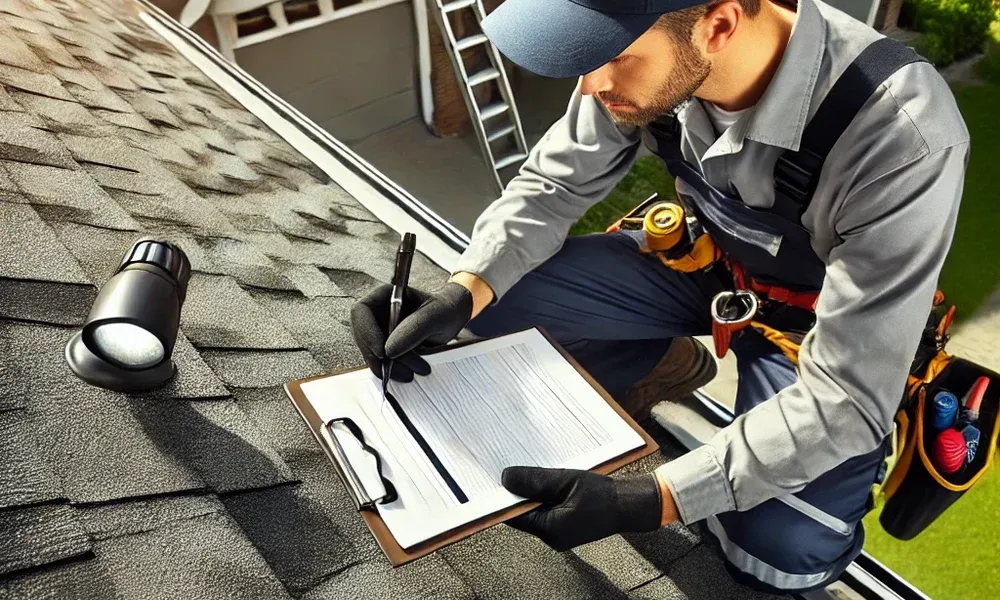
Most people think about their roof only when they see a leak or missing shingles after a storm. But the problems that end up costing the most money are usually the ones nobody sees until a contractor pulls back the layers and delivers the bad news. After years of working on roofs across Alpharetta and North Fulton County, here are the five issues we find most often that homeowners never knew were happening.
1. Poor attic ventilation slowly cooking your roof from underneath
This is hands down the most common hidden problem we encounter in Alpharetta homes, and it is one of the most damaging. Your attic needs a balanced flow of air - cool air coming in through soffit vents at the eaves and warm air exhausting through ridge vents or other outlets near the peak. Poor roof ventilation is one of the most overlooked causes of premature roof failure. When this system is not working properly, heat and moisture build up in the attic space and attack your roof from the underside.
What does this look like in practice? We see it constantly in homes built during the 1990s and early 2000s building boom in Alpharetta. Insulation gets pushed up against soffit vents during installation, blocking airflow. Sometimes the builder installed bathroom exhaust fans that vent into the attic instead of through the roof to the outside. Other times, the original ventilation design was simply inadequate for the attic space.
The damage: Trapped heat accelerates shingle aging from below, cutting years off your roof’s life. Trapped moisture causes mold growth on the underside of the roof deck, weakens the plywood, and can even cause nail pops that create leak points. We have pulled back perfectly normal-looking shingles and found decking so soft and water-damaged it had to be replaced.
What to look for: If your upstairs is significantly hotter than downstairs in summer, if you see condensation on attic surfaces in winter, or if your energy bills seem high for your home’s size, ventilation problems may be the culprit.
2. Improperly installed pipe boot flashings
Every plumbing vent pipe that exits through your roof needs a rubber boot (called a pipe boot or pipe jack) to seal the gap between the pipe and the roofing material. These boots have a limited lifespan - the rubber degrades in UV light and Georgia heat, cracking and pulling away from the pipe after 10-15 years.
The problem is that from the ground, these boots look fine. The crack might be on the back side of the pipe where it faces away from you, or the rubber might look intact but have lost its seal against the pipe. Meanwhile, water trickles in every time it rains, running down the pipe and into your walls or ceiling - often far from the actual entry point, making the leak source hard to trace.
The fix is cheap: A new pipe boot costs about $15-$25 in materials. Replacing one during a roof inspection is a 20-minute job. But if the leak has been active for months or years without being noticed, the water damage behind your walls can run into thousands.
What to look for: Check your ceilings for subtle discoloration, especially around bathrooms and kitchens where vent pipes tend to exit. If you have access to your attic, look for daylight or water stains around any pipe penetrations.
3. Nail pops pushing through shingles
As a house settles and the roof deck expands and contracts through temperature cycles, nails can gradually work their way up through the shingles. From the ground, a nail pop looks like a small raised bump on the roof surface. Most people never notice them. But each nail pop is a tiny hole in your roof’s waterproof barrier, and over time these holes allow water to seep in.
In Alpharetta, we see nail pops most frequently on roofs that are 8-15 years old, particularly on south-facing slopes that get the most heat exposure. The repeated thermal cycling of hot summer days and cooler nights works the nails loose gradually.
The fix: Each nail pop can be resealed individually - a roofer lifts the shingle, drives the nail back down (or replaces it with a slightly larger one), applies roofing sealant, and presses the shingle back into place. Simple, inexpensive, and prevents water damage that is anything but.
What to look for: On a bright day, look at your roof from across the street. Nail pops create small shadows or bumps that are easiest to spot when the sun is at an angle. If you see more than a handful, it is worth having someone take a closer look.
4. Gutter and fascia board damage hiding behind clean gutters
Gutters that look fine from the street can be hiding serious problems where they attach to your fascia boards. Regular gutter maintenance helps catch these issues before they escalate. Water that runs behind the gutter instead of through it soaks the fascia, which is the wooden board your gutters are mounted to. Over time, this causes rot that weakens the gutter attachment and allows water to reach the soffit and even the roof decking at the eaves.
We see this frequently in Alpharetta homes with mature trees. Leaves and debris create small dams inside the gutter, causing water to back up and overflow behind the gutter rather than flowing through the downspouts. The homeowner cleans the gutters regularly and thinks everything is fine, but the damage behind the gutter progresses silently.
The damage: Rotted fascia boards compromise your gutter system and can allow water into the eave structure. Once water gets into the eave, it can travel along the roof deck and cause damage far from the original entry point. We have found roof deck damage six feet from the eave that traced back to a fascia board problem.
What to look for: Look at your fascia boards from below. Paint that is peeling, wood that looks swollen or discolored, or gutters that seem to be pulling away from the house are all signs of hidden moisture damage. If you push on the fascia with your thumb and it gives, the wood is already compromised.
5. Valley deterioration on complex roof lines
Roof valleys - the V-shaped channels where two roof slopes meet - handle more concentrated water flow than any other part of your roof. In heavy Georgia rain, gallons of water funnel through these valleys every minute. The shingles and underlayment in valleys wear out faster than the rest of the roof, but from the ground, valleys are one of the hardest areas to inspect.
Many Alpharetta homes, especially those in established neighborhoods like Windward, Thornberry, and the communities along Kimball Bridge, have complex roof lines with multiple valleys. These homes are particularly susceptible to valley problems because they have so many of them.
The damage: When valley protection fails, the leaks tend to be significant because of the volume of water flowing through these channels. A valley leak during a heavy storm can send a large amount of water into your attic very quickly, and because valleys are between slopes, the water damage often shows up in unexpected locations inside the house.
What to look for: After a heavy rain, check your attic for any signs of fresh moisture along the underside of the roof deck, particularly where slopes intersect. From outside, look for shingles in valleys that appear more worn, buckled, or discolored compared to the surrounding roof.
The argument for regular professional inspections
Every one of these problems is easier and cheaper to fix when caught early. A professional roof inspection in Alpharetta typically costs far less than the cheapest repair on this list, and it catches all five of these hidden issues in a single visit. We recommend having your roof inspected at least once a year, ideally in spring after winter weather and before summer storm season.
The inspection should include checking attic ventilation from inside, examining all flashings and penetrations, looking for nail pops across the entire roof surface, evaluating gutter attachment and fascia condition, and closely examining every valley and transition point. That is what we do on every inspection, and it is how we help Alpharetta homeowners avoid the expensive surprises that come from problems hiding in plain sight.
Worried About Hidden Roof Damage? Contact Best Alpharetta Roofer
The problems on this list are invisible from the ground — but they are not invisible to an experienced roofer on your roof. Best Alpharetta Roofer has serviced 2,473+ roofs across Alpharetta and North Metro Atlanta since 2016. Call (470) 888-0030 for a free roof inspection or schedule your estimate online.
Related Services: